
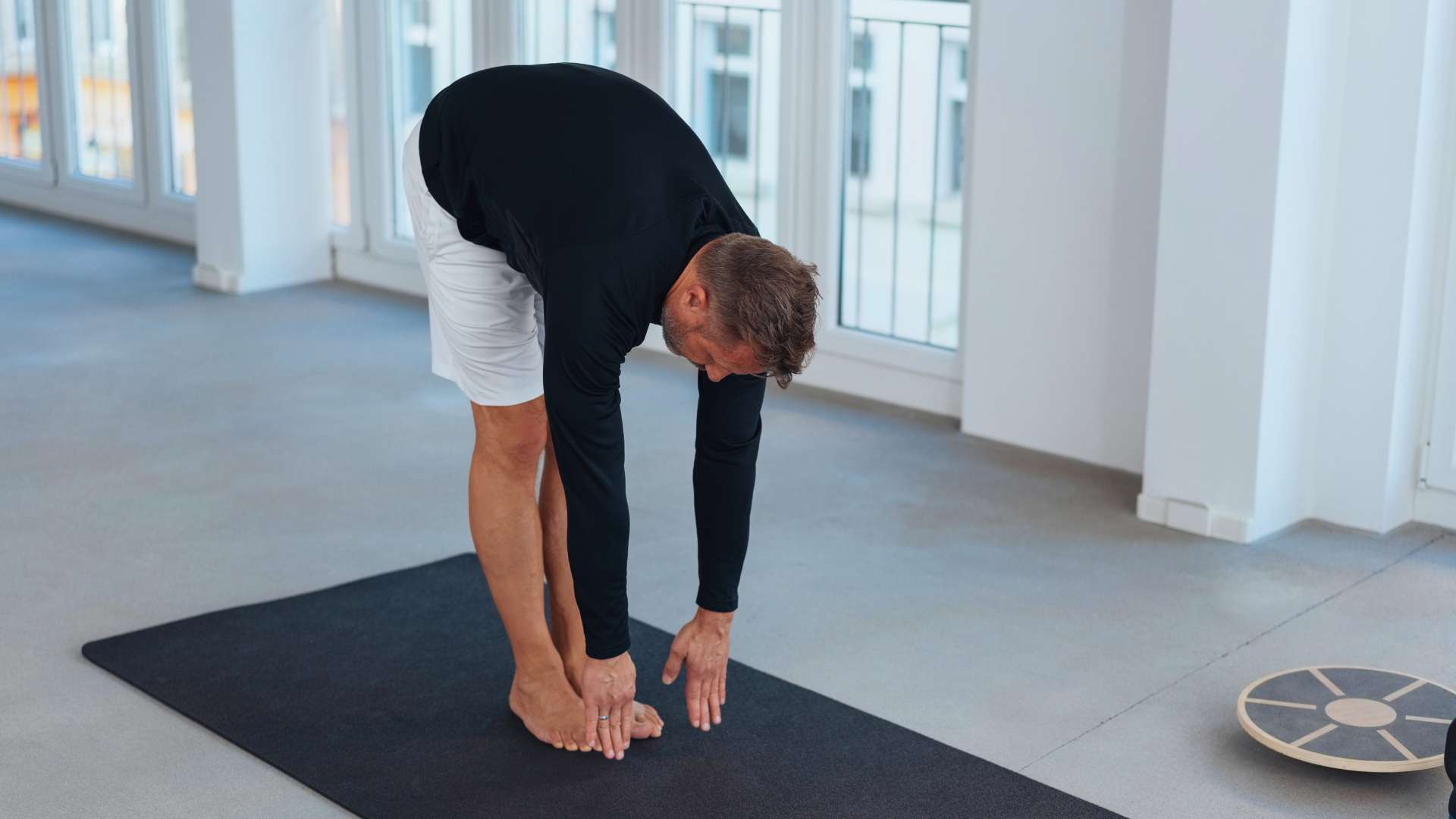
You can start simple and safe: choose a handful of gentle moves that target major muscle groups, focus on controlled breathing, and stop if a stretch causes sharp pain. These straightforward stretches—hamstring reaches, shoulder rolls, chest openers, hip flexor lunges, and a gentle spinal twist—offer the best starting point for beginners to improve flexibility and reduce stiffness.
They should prioritise proper form, steady progress, and consistency over intensity to build a reliable routine. The article explains core principles that keep stretching effective and shows step-by-step how to perform each beginner-friendly stretch with confidence.
Core Principles of Stretching for Beginners
Beginners should focus on consistent, safe practice that increases the range of motion and reduces injury risk. Emphasise proper technique, gradual progression, and placing stretching into a daily routine.
Benefits of Stretching and Flexibility
Stretching increases passive and active range of motion (ROM) in joints, which helps tasks like reaching, bending, and turning. Improved flexibility often reduces muscle tightness that can limit movement and cause compensations during daily activities or exercise.
Regular stretching supports mobility by improving muscle length and joint comfort. For beginners, even short daily sessions (5–10 minutes) can yield measurable gains in flexibility and make strength training or cardio more effective.
Practical gains include easier posture control, fewer muscle cramps, and smoother movement transitions. These benefits also lower the chance of minor strains when lifting, twisting, or performing repetitive tasks.
Stretching Safely: Guidelines and Common Mistakes
Always warm up with light aerobic activity for 5–10 minutes before stretching to raise muscle temperature and blood flow. Cold muscles are less elastic; stretching cold muscles can increase injury risk.
Use a pain-free range: stretching should create mild tension, not sharp pain. Hold static stretches 15–60 seconds, depending on the muscle and individual tolerance. Breathe slowly and avoid bouncing; ballistic motions can cause strains.
Common mistakes include overstretching to the point of pain, skipping warm-ups, holding breath, and neglecting opposing muscle groups. Beginners should progress gradually, track limitations (e.g., tight hamstrings), and avoid comparing flexibility to others.
Types of Stretching: Static vs. Dynamic
Static stretching involves holding a position to lengthen a muscle and is best used after workouts or during separate flexibility sessions. Static holds typically last 15–60 seconds and help increase muscle length and improve flexibility over time.
Dynamic stretching uses controlled movement through a joint’s ROM and functions as an active warm-up. Examples include leg swings, arm circles, and walking lunges. Dynamic stretching prepares muscles and the nervous system for activity and can improve mobility when done before exercise.
Both types have roles: dynamic stretching for warm-up and performance, static stretching for post-exercise recovery and targeted flexibility gains. Combining both in a stretch routine addresses immediate mobility needs and long-term flexibility improvements.
How Often and When to Stretch
Daily stretching yields steady improvements in flexibility and ROM. Beginners should aim for 10–20 minutes most days, splitting time between dynamic warm-ups before activity and static holds afterwards or in standalone sessions.
For general mobility, perform dynamic stretches before strength or cardio sessions and static stretches after workouts or in evening routines to aid recovery. If targeting a specific tight area (e.g., hips or calves), add short focused sessions twice daily until mobility improves.
Adjust frequency based on response: reduce intensity if soreness persists, and increase duration or hold time as flexibility improves. Tracking progress (measure ROM or note ease of specific movements) helps set realistic, incremental goals.
Best Stretching Exercises for Beginners: Step-by-Step Guide
This section lists specific stretches that target key muscle groups, describes starting positions, and gives clear cues for 20–60 second holds and safe progressions. It emphasises simple standing or mat-based moves that fit a 10-minute stretch routine and improve flexibility in legs, hips, back, chest, shoulders, and sides.
Lower Body Stretches: Calves, Hamstrings, Quadriceps, and Hip Flexors
Begin with a standing calf stretch: face a wall, place hands on it, step one foot back, keep the heel down and the back leg straight; hold 20–30 seconds, then switch. For extra intensity, bend the back knee slightly or perform a standing calf stretch on a step for a greater range of motion.
Address hamstrings with a seated hamstring stretch or standing hamstring stretch: hinge at the hips, keep a straight spine, reach toward the shin or ankle; stop when a gentle pull appears. For tight hamstrings, use a towel around the foot to control the stretch and aim for 20–40 second holds.
Use a standing quadriceps stretch: balance on one foot, bend the other knee, grab the ankle behind, keep knees close together and pelvis neutral; hold 20–30 seconds. For alternatives, try a lying knee-to-chest stretch for the lower back and glutes or a butterfly stretch/seated inner thigh stretch to open the inner thighs.
Open hip flexors with a kneeling hip flexor stretch: kneel on one knee, step the other foot forward into a lunge, tuck the pelvis and push the hips forward to feel the front hip; hold 30–45 seconds. Add a walking lunge sequence to build mobility and practice hip circles to loosen the joints.
Upper Body and Core Stretches: Chest, Shoulders, Back, and Sides
Start chest mobility with a doorway chest stretch: place your forearm on a doorframe at shoulder height and gently rotate away to feel the pectoral stretch; hold 20–30 seconds per side. For an active option, perform a standing lat stretch or a standing lat reach by reaching one arm overhead and leaning to the opposite side.
Relieve shoulder tightness using the cross-body shoulder stretch and overhead triceps stretch (overhead tricep stretch): pull the arm across the chest with the opposite hand, then lift the arm and bend the elbow, pressing gently on the elbow. Include shoulder rolls and eagle arms to increase shoulder blade mobility and reduce tension.
Target the back and spine with cat-cow on hands and knees: alternate arching and rounding the spine slowly for 8–12 cycles. Add a seated spinal twist to rotate the thoracic spine and a standing lat stretch to release the side body. For full-body posterior chain work, include downward-facing dog, which lengthens calves, hamstrings, back, and shoulders simultaneously.
Full-Body Stretching Routine for Beginners
Design a 10-minute stretch routine by sequencing moves: 1) 1–2 minutes of gentle shoulder rolls and hip circles to warm up; 2) standing calf stretch and standing hamstring stretch, 20–30 seconds each side; 3) walking lunge with hip flexor emphasis for 30–60 seconds total; 4) standing quadriceps stretch and seated inner thigh (butterfly stretch) for 20–40 seconds each.
Continue with upper-body work: cross-body shoulder stretch, overhead triceps stretch, and doorway chest stretch, 20–30 seconds per side. Finish with cat-cow for spinal mobility, a seated spinal twist on each side, and a 30–60 second downward-facing dog to integrate legs and back.
Progress by increasing hold times, adding repetitions, or converting static holds into gentle dynamic pulses. Encourage consistent practice three times weekly to improve flexible legs, reduce stiffness, and build a reliable stretch routine.